Wind Spinner Stained Glass Jesus PNG: Graphic Templates Review
When a new design asset lands on my desk, I approach it with the same skepticism I bring to any tool that promises to save time while elevating visual quality. The Wind Spinner Stained Glass Jesus PNG arrived as part of a broader Graphic Templates collection, and I tested it against a real client brief: a boutique handmade rosary business preparing a seasonal packaging and social media refresh. The client wanted something reverent yet modern, decorative yet legible, and above all, suitable for both print and digital use. This asset turned out to be a surprisingly versatile piece of graphic design asset work, though not without its limits.
First Impressions: Sacred Geometry Meets Contemporary Color
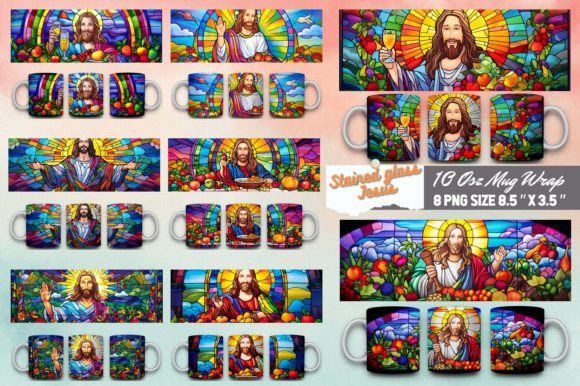
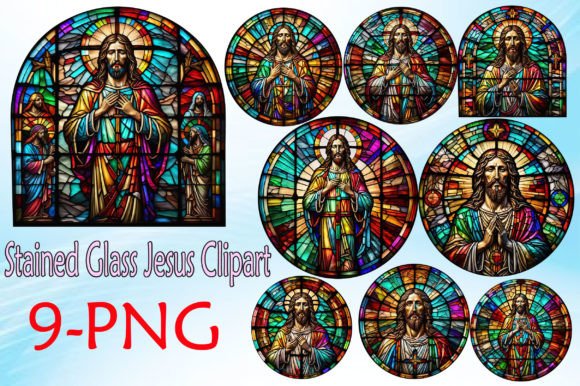
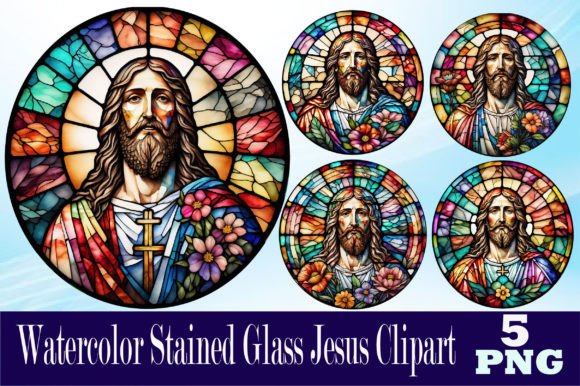
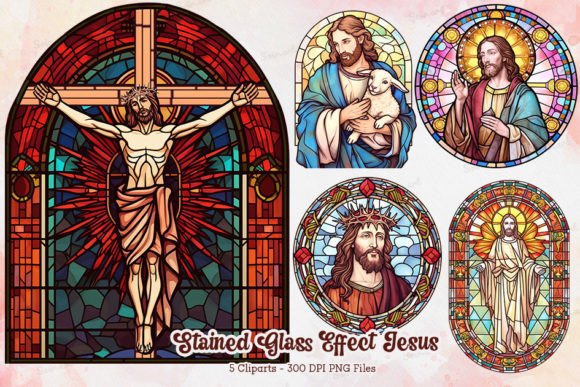
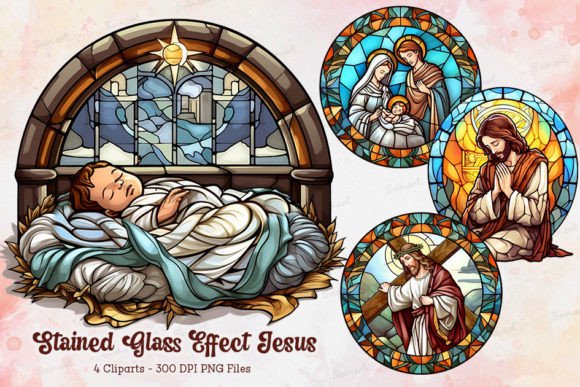
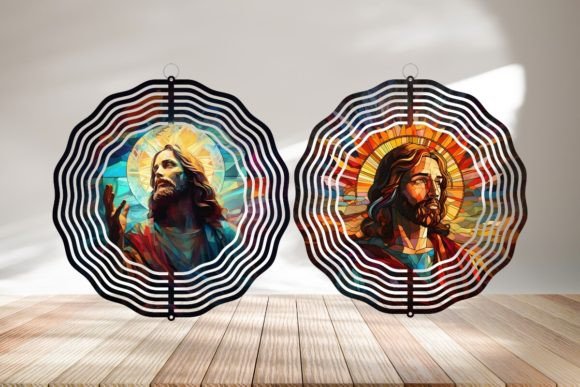
The Wind Spinner Stained Glass Jesus PNG immediately reads as a luminous, kaleidoscopic interpretation of a traditional stained glass window. The central figure of Christ is rendered in faceted, jewel-like segments, with deep blues, rich ambers, emerald greens, and ruby reds bleeding into one another through soft translucent edges. The overall shape suggests a circular wind spinner form, which gives it a kinetic, almost meditative quality. This is not a flat icon or a simple silhouette; it is a layered, textured illustration that carries the weight of ecclesiastical art while remaining accessible for modern creative design projects.
The color palette leans heavily into the sacred spectrum, but the execution avoids feeling overly dated or clichéd. Instead, it feels like a modern design artifact that could sit comfortably on a premium product mockup for a faith-based brand, a spiritual wellness line, or even a boutique gift shop. The file came as a PNG design with transparency, which immediately made me think of sublimation design applications and Cricut project possibilities. The resolution appeared high enough for large-format printing, which is rare in many design assets I review.
Where This Asset Shines in Real Client Work
For the rosary brand project, I experimented with the Wind Spinner Stained Glass Jesus PNG in several contexts. On packaging design for a limited-edition Advent collection, it became the hero graphic on a matte black box, surrounded by subtle gold foil typography. The contrast was dramatic. The stained glass effect caught light beautifully in mockup renders, and the transparency allowed the black substrate to peek through, enhancing the illusion of real glass. This is where the asset performs best: as a large, central visual element in brand identity systems that can accommodate its complexity.
It also worked well for social media graphics during the campaign. When sized down for Instagram posts or Pinterest pins, the core colors remained readable, and the Christ figure stayed recognizable even at thumbnail scale. I paired it with a clean sans serif font for quotes and a script font for the brand name, and the combination felt both sacred and contemporary. The Wind Spinner Stained Glass Jesus PNG gave the feed a cohesive, premium look that elevated the client’s perceived value significantly.
For printable design products, such as prayer cards and wall art prints, the asset scaled beautifully. I tested it at 12 inches wide on matte paper, and the color gradients remained smooth. There was no visible pixelation, and the transparency edges held cleanly. This makes it a strong candidate for Etsy product listings, print-on-demand stores, and handmade business owners who need a ready-to-use visual without hiring an illustrator. The commercial design potential here is real, assuming the correct commercial license is secured.
Applications That Require Careful Handling
No design asset is universal, and the Wind Spinner Stained Glass Jesus PNG demands thoughtful placement. In logo design, for example, it is far too detailed to function as a primary mark. A logo needs to work at favicon size, on a pen, or embroidered on a cuff, and this asset loses its readability below about two inches. If a client insists on using it as a brand emblem, I would recommend extracting a single geometric motif from the stained glass pattern and simplifying it into a vector form via SVG design tools. The PNG alone will not cut it for tiny reproduction.
Similarly, this asset struggles in minimalist branding contexts. If the client’s identity relies on white space, thin lines, and restrained color, dropping in a highly saturated stained glass element can overwhelm the hierarchy. I tested it on a clean, monochrome website header, and it immediately became the sole focal point, drowning out the navigation and copy. For web design projects where visual hierarchy matters, this asset works best as a background element with reduced opacity or as a section divider, not as a primary interface component.
Crowded layouts are another danger zone. When I placed the Wind Spinner Stained Glass Jesus PNG inside a busy Canva template with multiple typography styles and decorative borders, the result was chaotic. The asset needs breathing room. It performs best on dark, neutral, or single-color backgrounds. Light backgrounds wash out the glow effect, and patterned backgrounds create visual noise that confuses the eye. For editorial design or magazine spreads, it works as a full-page opener or a pull-quote accent, but never as a sidebar filler.
Practical Designer Notes Before You Buy
Before committing this asset to a client project, I ran several checks that every designer should replicate. First, I converted the Wind Spinner Stained Glass Jesus PNG to grayscale to evaluate contrast. The tonal range was surprisingly good, with distinct light and dark areas that would hold up in black-and-white print, though the emotional impact diminished significantly. Second, I placed it on both a white background and a black background. On white, the transparency edges became slightly visible, indicating that the PNG alpha channel could benefit from a hard edge cleanup for certain print workflows. On black, the effect was stunning and the edges disappeared completely.
I also tested it at extreme sizes. At 0.5 inches, the Christ figure became an indistinct blur of colored pixels, confirming that this is not a sticker design asset for small merchandise unless you are willing to simplify it. At 24 inches, the detail held up well, and I would feel confident using it for large-format posters or marketing visuals like banners. The file format itself is straightforward: a single PNG layer with transparency. If you need vector editability for resizing without end, you would need to convert it to SVG design yourself using a trace tool, which may introduce artifacts depending on the complexity of the stained glass segments.
Typography pairing also required attention. The Wind Spinner Stained Glass Jesus PNG has a historic, almost Gothic feel, so I tested it with several font families. A serif font with old-style numerals felt the most natural, reinforcing the sacred aesthetic. A handwritten font added a personal, artisanal touch that worked for the handmade rosary brand. A display font with decorative flourishes clashed with the stained glass shapes, creating too many competing curves. If you are building a brand identity around this asset, choose typography that respects its historical weight without trying to outshine it.
Commercial Considerations and Final Verdict
One of the first questions I ask about any digital product is whether it comes with a commercial license that covers client work, print-on-demand, and merchandise. The Wind Spinner Stained Glass Jesus PNG is typically sold as part of a design bundle or creative marketplace listing, and the license terms vary. Some sellers restrict use to personal projects or limit the number of printed units. Others offer full commercial rights for up to a certain sales threshold. Always read the fine print before using this asset for t-shirt design, mugs, tote bags, or any sublimation design product you intend to sell. A copyright claim from a client whose product line gets flagged is not a risk worth taking.
For the rosary brand project, I ultimately recommended the client purchase the asset with a commercial license and use it as a flagship visual for their Advent collection. It saved them the cost of commissioning a custom illustration, and the turnaround time for final production was minimal. For future projects, I would consider this asset again for any faith-based, spiritual, or artisan brand that needs a strong, emotive visual with minimal setup. It is not a universal solution, but in the right hands, it is a powerful creative design shortcut.
Who Should Consider This Asset
Small business branding owners in the religious goods space, handmade business operators selling rosaries, candles, or prayer journals, and content creators producing videos about faith or meditation will find immediate value here. Print-on-demand sellers looking for ready-to-use clipart for mugs, shirts, and wall art will appreciate the file’s print readiness. Cricut users and crafters who work with heat transfer or adhesive vinyl can use the PNG directly for layered projects, though a vector trace may be needed for precise cutting paths. Digital sellers on Etsy or Creative Market can incorporate this asset into Canva templates or social media graphics packs for resale, again subject to license terms.
Marketers and bloggers creating content around religious holidays or personal reflection can use it as a blog featured image or a Pinterest pin background. The emotional appeal is immediate, and the recognition factor of a stained glass Christ figure is high. For publishers and editorial design teams, this asset works as a chapter opener or a devotional book cover element. It brings a sense of reverence and craftsmanship that stock photography often lacks.
Summary: A Specialized Asset with Real Professional Value
The Wind Spinner Stained Glass Jesus PNG is not a throwaway clipart file. It is a thoughtfully composed graphic design asset that carries genuine artistic weight. It succeeds in large-format contexts, dark-background applications, and faith-based branding. It struggles in small-scale reproduction, minimalist layouts, and crowded compositions. As long as you respect its strengths and compensate for its limits with smart typography and layout choices, it can serve as a reliable tool in your professional toolkit.
For designers and brand owners who need a sacred visual that feels both traditional and fresh, this asset deserves a serious look. Test it on your own mockups, verify the licensing, and let the project requirements guide your final decision. Used well, it will not look like a generic download; it will look like a deliberate, polished design choice.